The word mantra comes from the Sanskrit manasah, meaning “mind,” and tra, meaning “liberation.” In everyday life, our minds often move quickly from one thought or emotion to another, making it difficult to feel steady or focused. Mantra practice offers a way to gently guide that mental energy toward something positive and supportive.
“As you chant or pray, let go of all concepts and resistance. Open the heart until tears come and the hairs on your body stand on end.” (p. 93, Practices on the Buddhist Path, by Tarthang Tulku)
When we chant mantras, we connect with the sacred—both within ourselves and in the world around us. The sound and vibration give the mind a place to rest, helping us soften, open, and reconnect with what feels steady and meaningful.
Although this might sound abstract, this Mantra Retreat Weekend grounds the practice in the body and breath using the mantra Om Ah Hum. Om represents the body, Ah represents speech, and Hum represents the heart. Bringing all three into awareness helps cultivate balance, presence, and overall well-being.
In this retreat, we will work with several Tibetan Buddhist mantras:
1. The mantra of Shakyamuni Buddha: Tad Yatha Om Muni Muni Maha Muni Shakya Muni Ye Soha
2. The mantra of Avalokiteshvara: Om Mani Padmae Hum Hri
3. The mantra of Manjushri: Om Ah Ra Pa Tsa Na Dhi
4. The mantra of Embodiment: Om Ah Hum
5. The mantra of Padmasambhava: Om Ah Hum Vajra Guru Padma Siddhi Hum
6. The mantra of Todtreng Tsal: Vajra Guru Padma Todtreng Tsal Vajra Samaya Dza Dza Sarva Siddhi Pala Hum Aha Om Ah Hum
7. The mantra of the Medicine Buddha: Tadya Tha Om Bekandje Bekandje Maha Bekandje Radja Samungate Soha
Mantras and visualizations support us in connecting with our inner healing power and caring nature. To deepen this work, we will also practice Kum Nye yoga and meditation.
For Whom
This retreat is open to everyone. No experience with singing, meditation, or Buddhism is required—just bring an open, curious mind and a willingness to fully immerse yourself in the joy and practice of chanting.
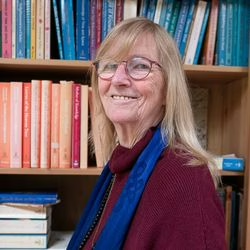
Elske van de Hulst is a co-dean, trustee, and senior instructor at Nyingma Centrum Amsterdam and serves on the board of the World Peace Stupa Center Europe. Originally trained as a mime, she worked in theatre as an actress, director, and author from 1969 to 1995, later teaching at the Amsterdamse Hogeschool voor de Kunsten and serving on the Dutch Arts Council. Since discovering Tarthang Tulku’s work in 1998, she has devoted herself to the “theater of the mind” and now teaches Meditation, Knowledge of Freedom, Revelations of Mind, Dimensions of Mind, Caring, and Lotus Trilogy courses in Amsterdam and beyond.
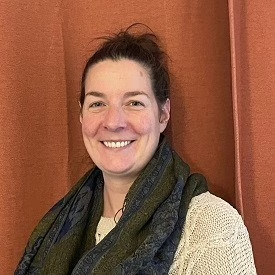
Natasha Anikina works as the office manager at Nyingma Centrum Amsterdam, one of the co-founding organizations of the World Peace Stupa Retreat Center. She began volunteering at the center in 2013, initially focusing on administrative work and later guiding meditation classes. Over time, her interest deepened in the devotional aspects of Buddhism, particularly the Medicine Buddha ceremony, which she now leads monthly at the Nyingma Centrum. Through her work, she has cultivated greater calm and centeredness and hopes to help others experience the same sense of relaxation and well-being through the programs she offers.
Further study and practice along the Dharma Path are supported through our cooperating centers in a variety of ways. These include weekly classes, workshops, retreats, special projects, and pilgrimage opportunities. Our centers also welcome involvement as a volunteer sangha member, allowing you to practice your understanding, attitude, and conduct while working together with others on meaningful and virtuous goals. Learn more about volunteer opportunities here.
Meld je hier aan en blijf via onze maandelijkse nieuwsbrief op de hoogte van de laatste ontwikkelingen in het Stupa Center.